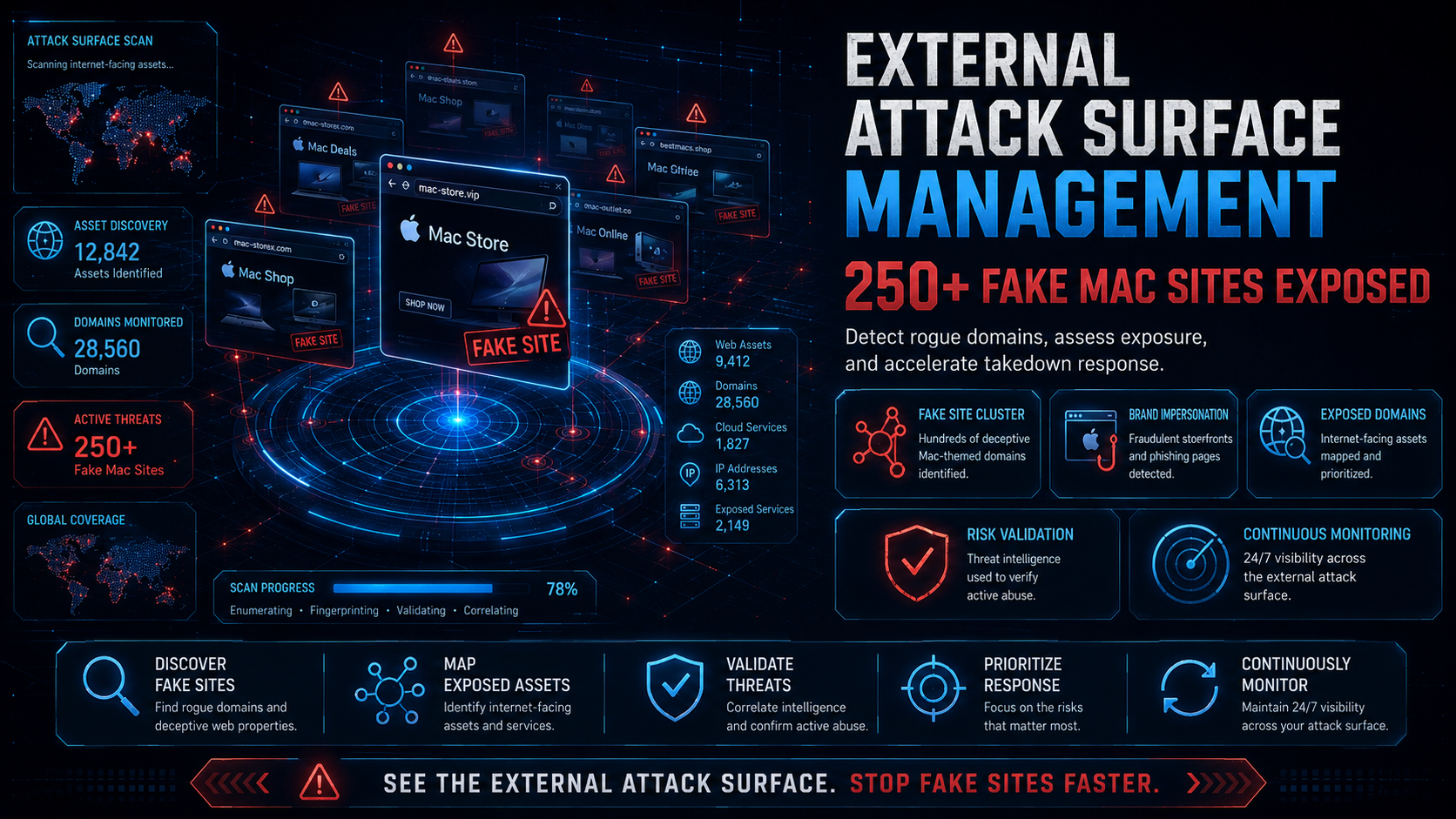
Cybercriminals are intensifying their focus on Mac users, deploying 250+ fake download domains to spread AMOS and MacSync infostealers. This alarming development highlights the urgent need for external attack surface management strategies that can detect malicious infrastructure before it impacts enterprises. By combining exposed asset discovery with security risk management, organizations can proactively defend against evolving threats.
The campaign demonstrates how attackers exploit user trust in software downloads, weaponizing cloned websites to deliver malware. For businesses, this is not just a technical issue—it’s a reputational and financial risk that requires immediate attention.
The Rise of Fake Download Domains
Attackers are leveraging cloned portals that mimic legitimate download sites. These domains trick users into installing malware disguised as updates or installers. Once executed, AMOS and MacSync harvest sensitive data, including:
- Login credentials
- Browser history
- System files
- Cryptocurrency wallets
📌 Practical tip: Always verify download sources directly from vendor websites and avoid third‑party mirrors unless officially endorsed.
Why External Attack Surface Management Matters
🔑 External attack surface management (EASM) is the backbone of modern cybersecurity. It enables organizations to:
- Continuously scan for malicious domains targeting their brand.
- Identify shadow IT and unauthorized assets.
- Detect phishing infrastructure before it impacts employees or customers.
Without EASM, enterprises risk blind spots that attackers exploit. This is especially critical in industries where customer trust is paramount, such as finance, healthcare, and e‑commerce.
Exposed Asset Discovery in Action
🌐 Exposed asset discovery helps security teams uncover vulnerable domains, misconfigured servers, and forgotten subdomains. In the case of these fake download sites, proactive scanning could have flagged suspicious DNS registrations early.
Checklist for exposed asset discovery:
- Monitor DNS records daily
- Track SSL certificate issuance
- Audit forgotten cloud buckets
- Integrate alerts with SIEM platforms
By adopting these practices, organizations can reduce the window of opportunity for attackers.
Security Risk Management and Mac Infostealers
📊 Effective security risk management requires prioritizing threats based on impact. Infostealers like AMOS and MacSync pose high‑severity risks because they compromise credentials that can cascade into enterprise breaches.
Key steps:
- Classify risks by asset criticality
- Apply compensating controls (MFA, endpoint detection)
- Train employees on phishing and malicious downloads
Enterprises that fail to integrate risk management into their security posture often struggle to respond quickly when incidents occur.
Attack Surface Monitoring Software
🚨 Organizations are increasingly adopting attack surface monitoring software to automate detection. These platforms integrate with top digital risk protection platforms, offering visibility into malicious campaigns across the web.
Quote from a security analyst: “Attack surface monitoring software is no longer optional—it’s the only way to stay ahead of domain‑based threats.”
Employee Security Training and AI Phishing Detection
Humans remain the weakest link. Incorporating Employee Security Training ensures staff recognize fake download prompts. Coupled with AI phishing detection, enterprises can block suspicious links before they reach inboxes.
Practical tip: Simulate phishing campaigns quarterly to measure employee resilience.
Domain Monitoring Service and Best Domain Monitoring Tool
🔍 A reliable domain monitoring service is essential to track malicious registrations. Choosing the best domain monitoring tool means prioritizing scalability, integration, and real‑time alerts.
Featured Snippet: How to Detect Fake Download Domains
Question: How can enterprises detect fake download domains targeting employees? Answer: By implementing external attack surface management, monitoring DNS registrations, leveraging attack surface monitoring software, and training employees to verify download sources.
Practical Checklist for Enterprises
✅ Steps to strengthen defenses against fake download domains:
- Deploy external attack surface management tools.
- Conduct exposed asset discovery weekly.
- Integrate security risk management frameworks.
- Train employees with phishing simulations.
- Subscribe to domain monitoring services.
- Evaluate the best domain monitoring tool for scalability.
The Broader Impact on Digital Risk
These campaigns highlight the growing importance of digital risk protection. Attackers are not just targeting individuals—they are undermining enterprise trust. By exploiting fake domains, they erode confidence in legitimate brands.
Enterprises must adopt a layered defense strategy that includes:
- Threat intelligence feeds
- Continuous monitoring
- Incident response readiness
Expert Insight
A cybersecurity strategist noted: “The proliferation of fake download domains is a wake‑up call. External attack surface management is the only way to ensure organizations are not blindsided by malicious infrastructure.”
Conclusion
The discovery of 250+ fake download domains delivering AMOS and MacSync infostealers underscores the critical role of external attack surface management. Enterprises must combine exposed asset discovery, security risk management, and attack surface monitoring software to stay resilient.
👉 Discover much more in our complete guide
👉 Request a demo NOW
Disclaimer: Threatexposure.io reports on publicly available threat‑intelligence sources. Inclusion of an organization in an article does not imply confirmed compromise. All claims are attributed to external sources unless explicitly verified.
Leave a Reply